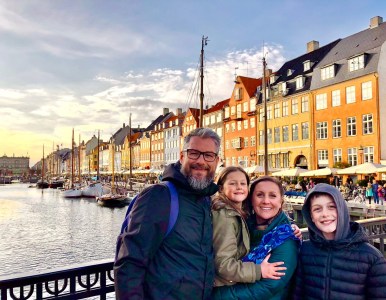
We have well and truly arrived in Cusco, the Incan capital of the world. It’s a bustling, thriving cosmopolitan place – a huge change from island life in Lake Titicaca.
The city itself has an oddly European feel, Elijah said it reminded him of Germany (where he went on language exchange) and we also felt the narrow streets and views of the rooftops made us think of Dubrovnik or Florence.
Today we are spending the morning exploring the Four Ruins (a collection of Incan ruins on the outskirts of the city), and then this afternoon we are having a tour around the city itself. Let’s hope we cope with all that walking at altitude!
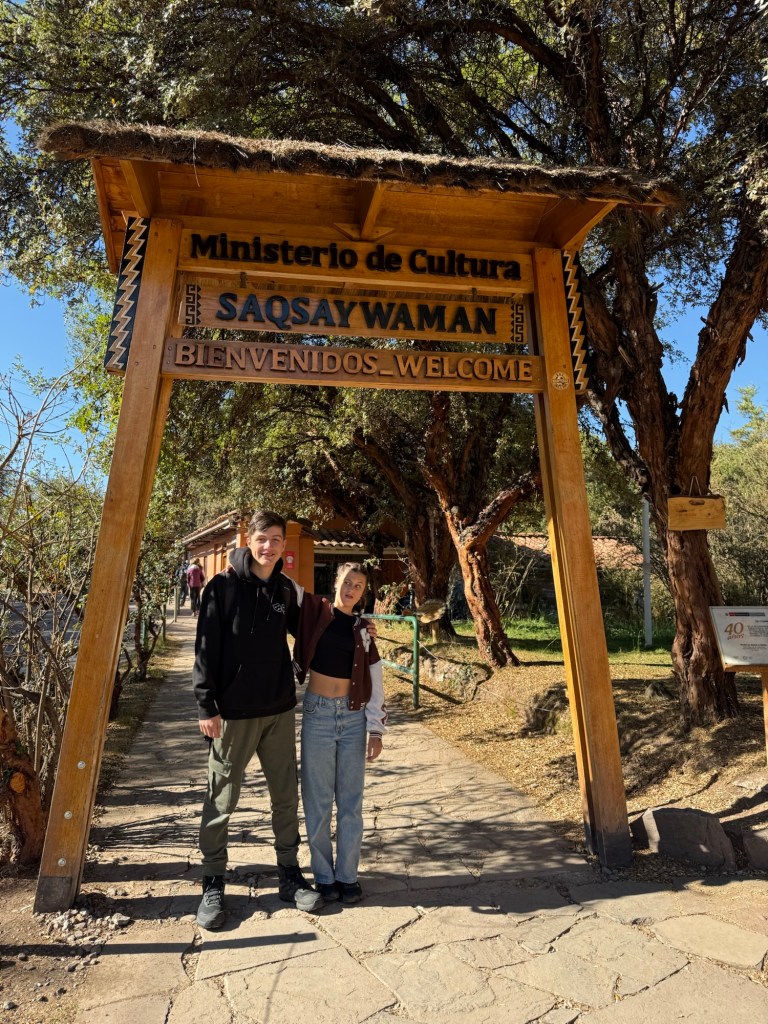
First up, “Saqsaywaman”, which means fortress. This is not its original Incan name, its original name is pronounced “Sac-sai-ooma”, which means Puma in the Quechuan language.
In this next video, Raul can be heard explaining that this amazing, megalithic temple is built over 3 layers. You often see symbols showing the condor, the puma and the snake – these three creatures form the Inca trilogy, a fundamental concept in their worldview.
The condor, puma, and snake represent three distinct realms: the condor represents the heavens (“hanan pacha”), the puma symbolises the earth (“kay pacha”) and the snake embodies the underworld (“uku pacha”).
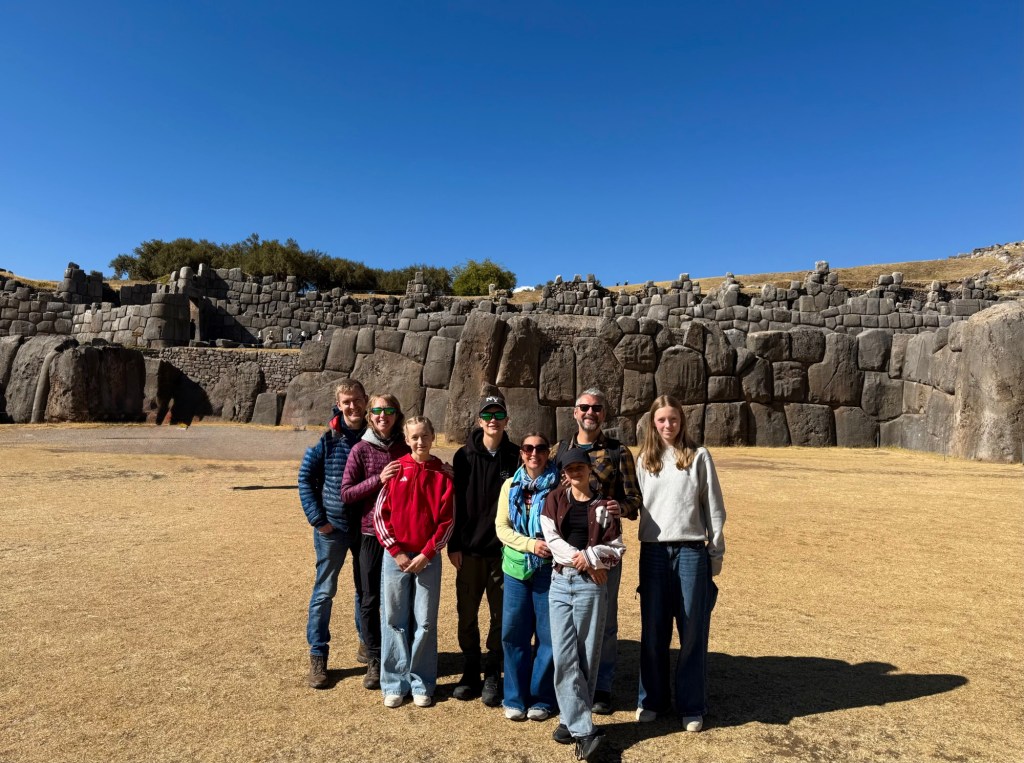
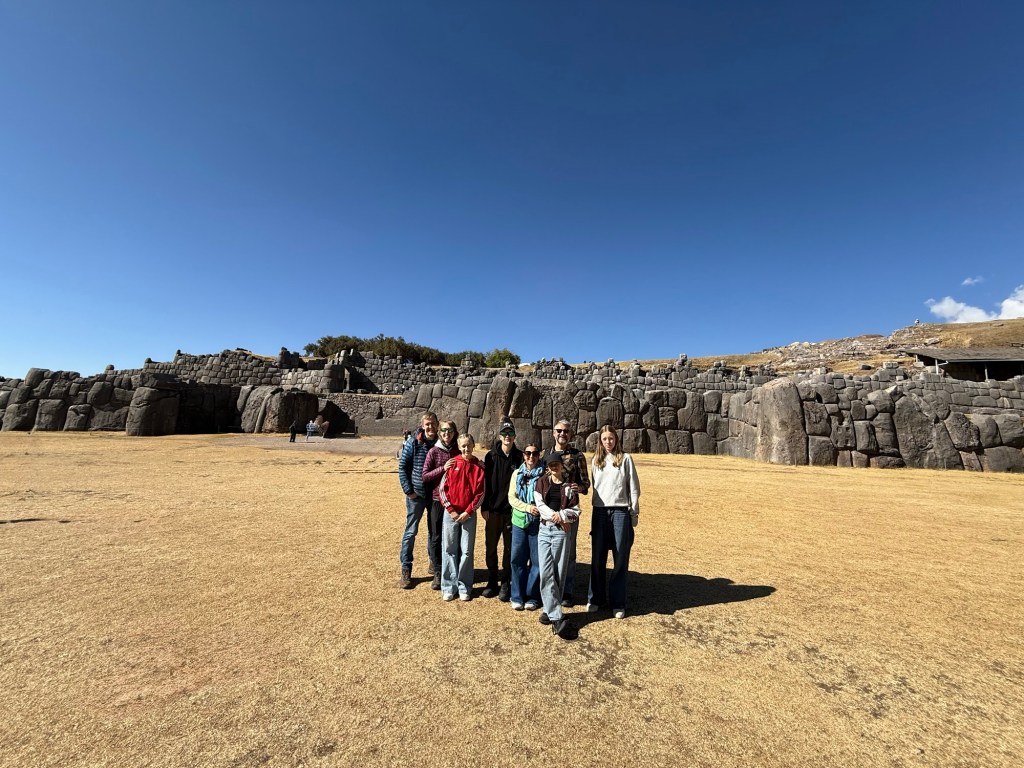
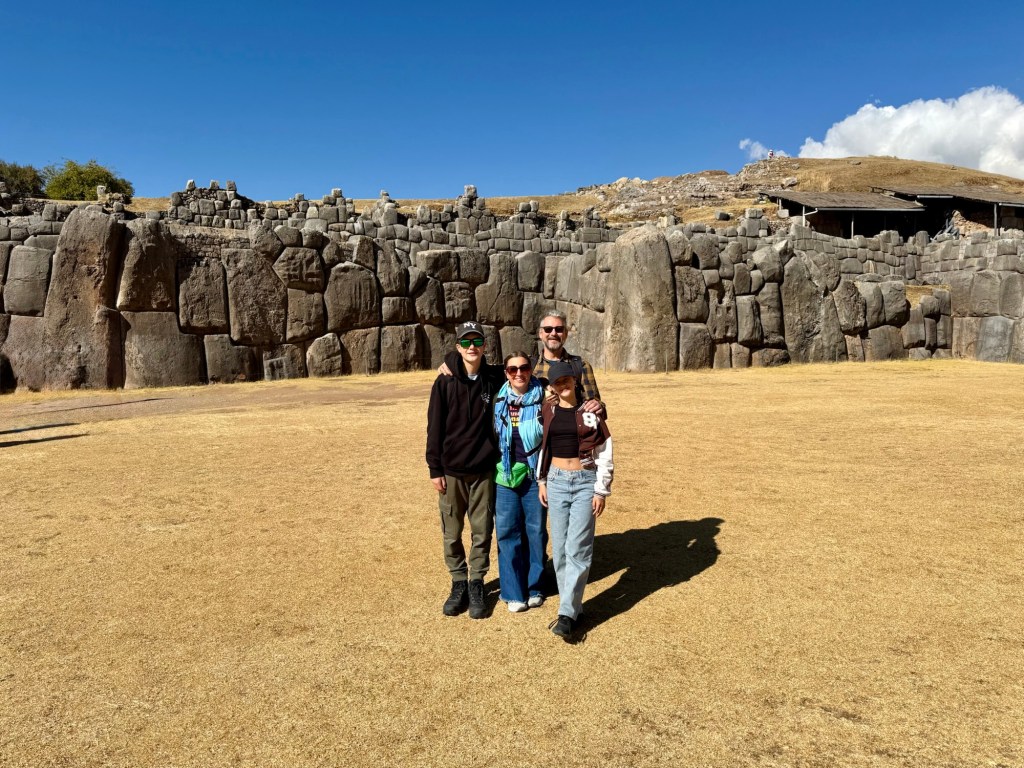
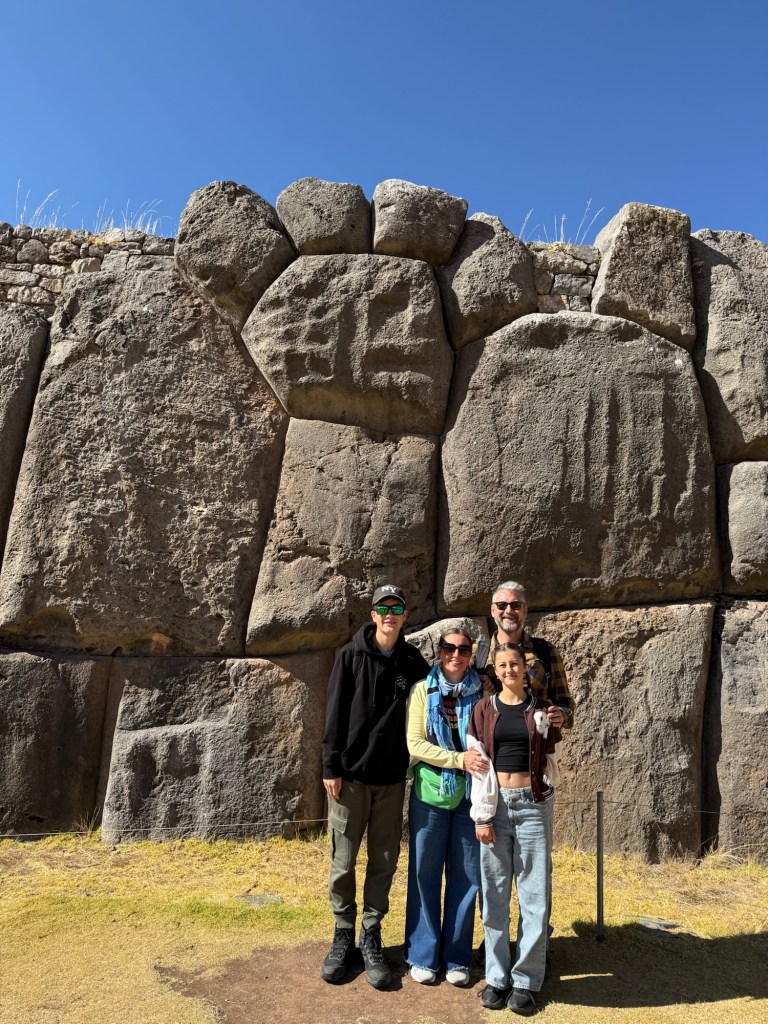
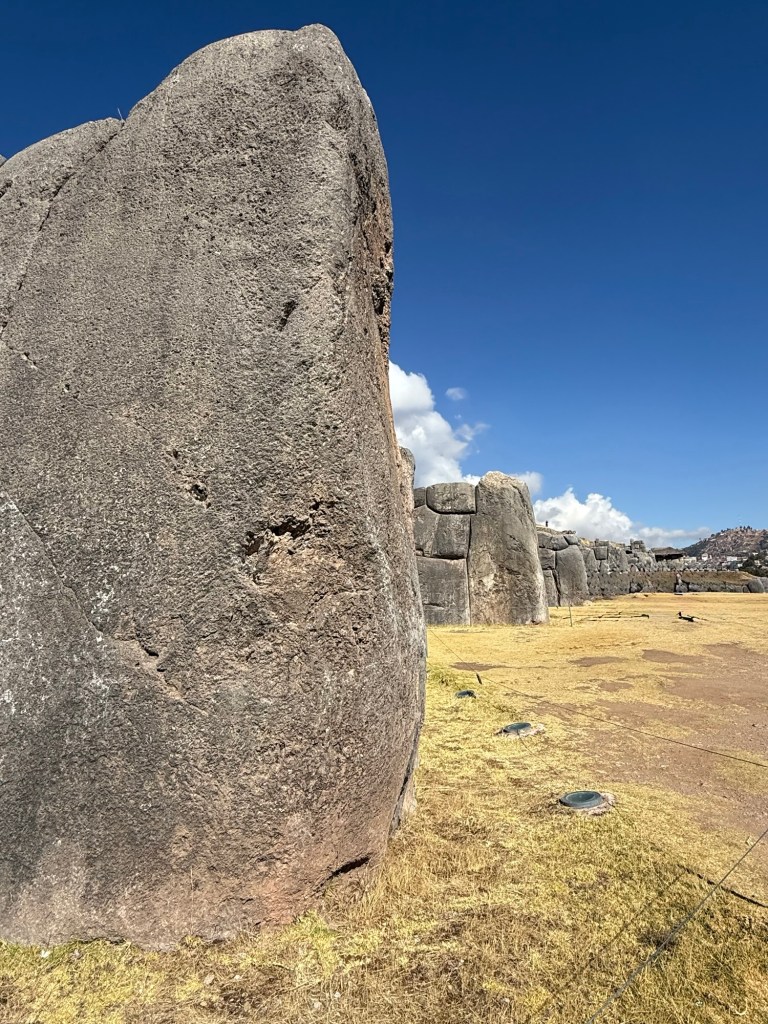
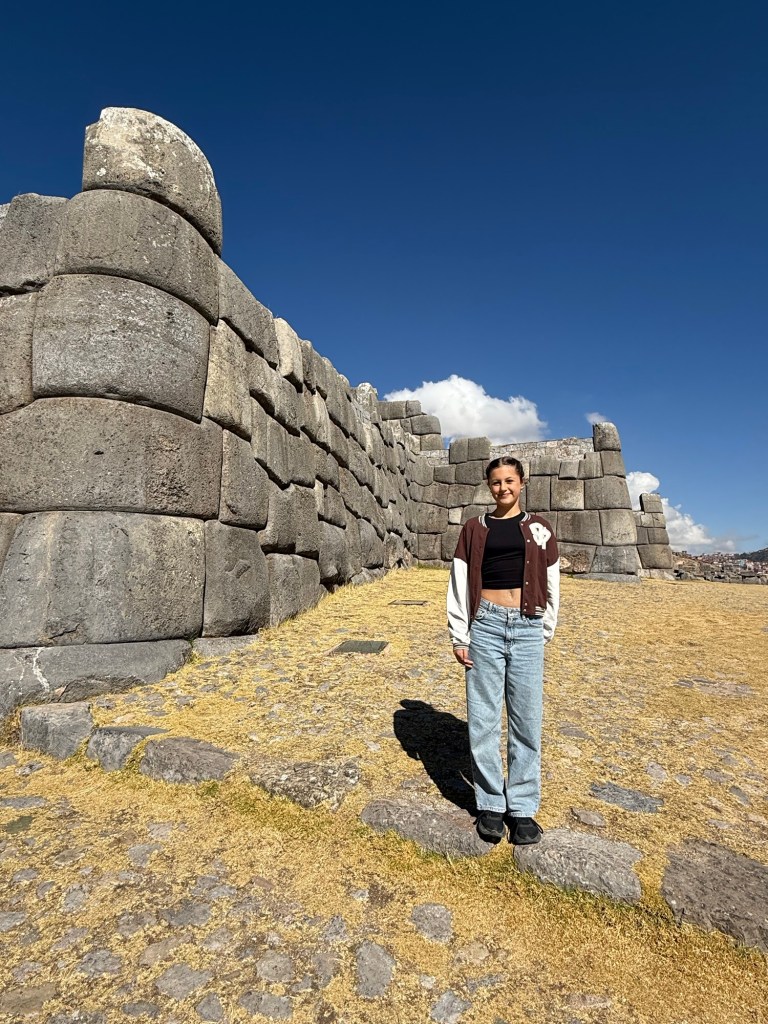
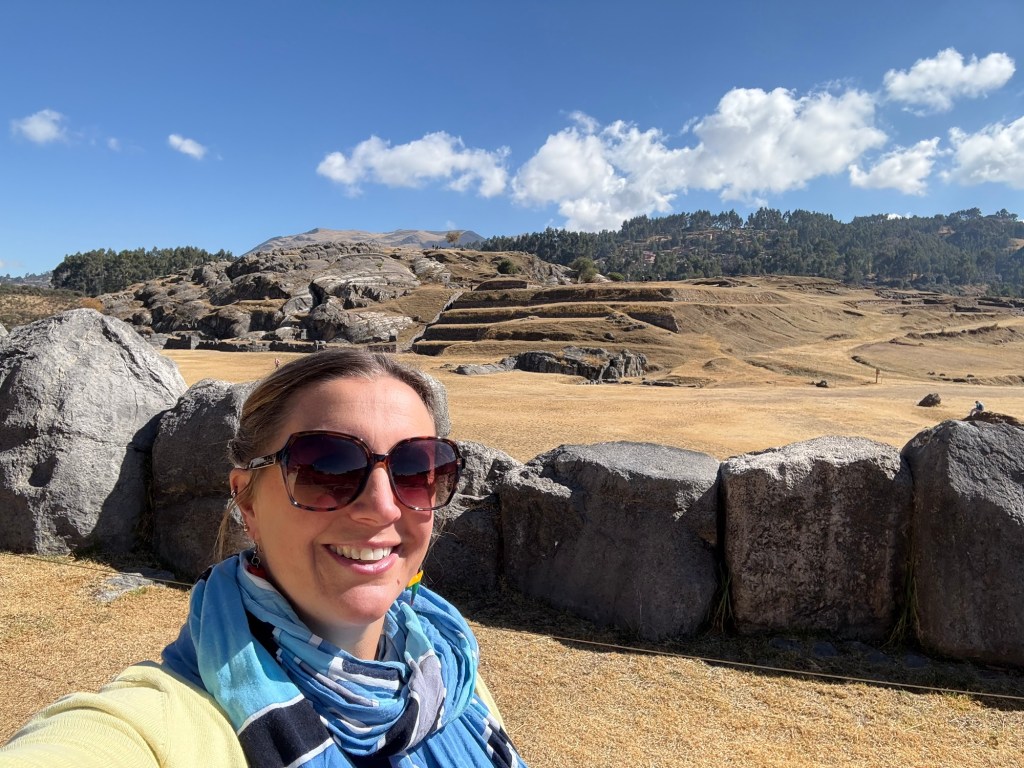
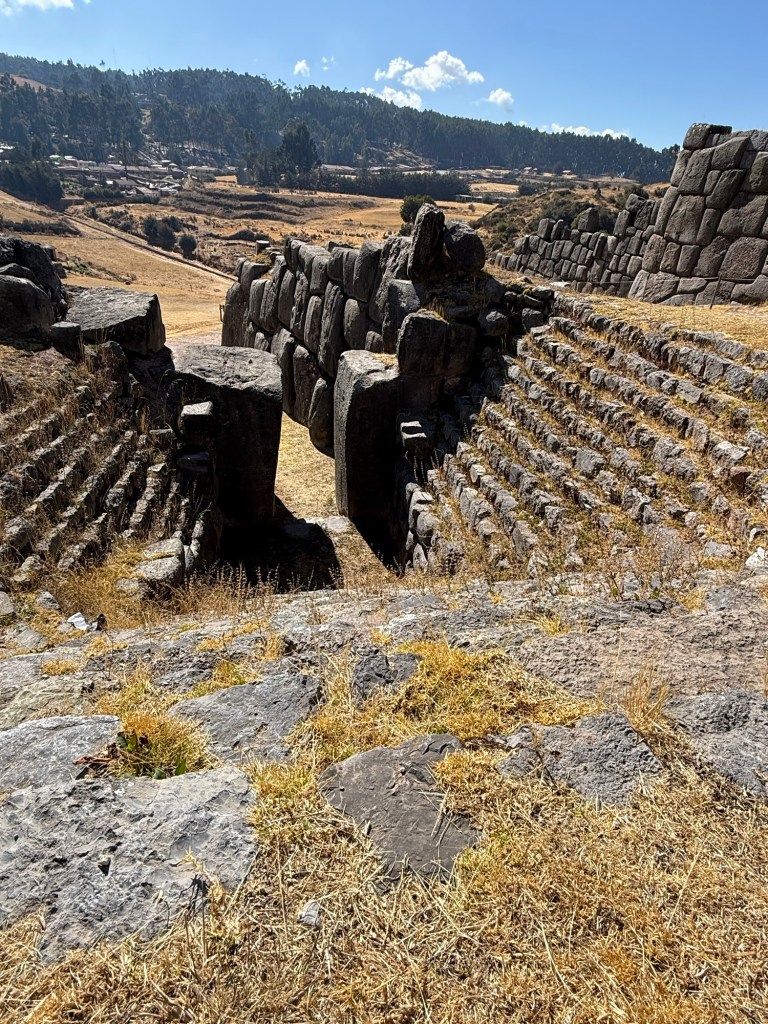
We spent a lovely hour wandering around the ruins, and enjoying all the historic information from Raul.
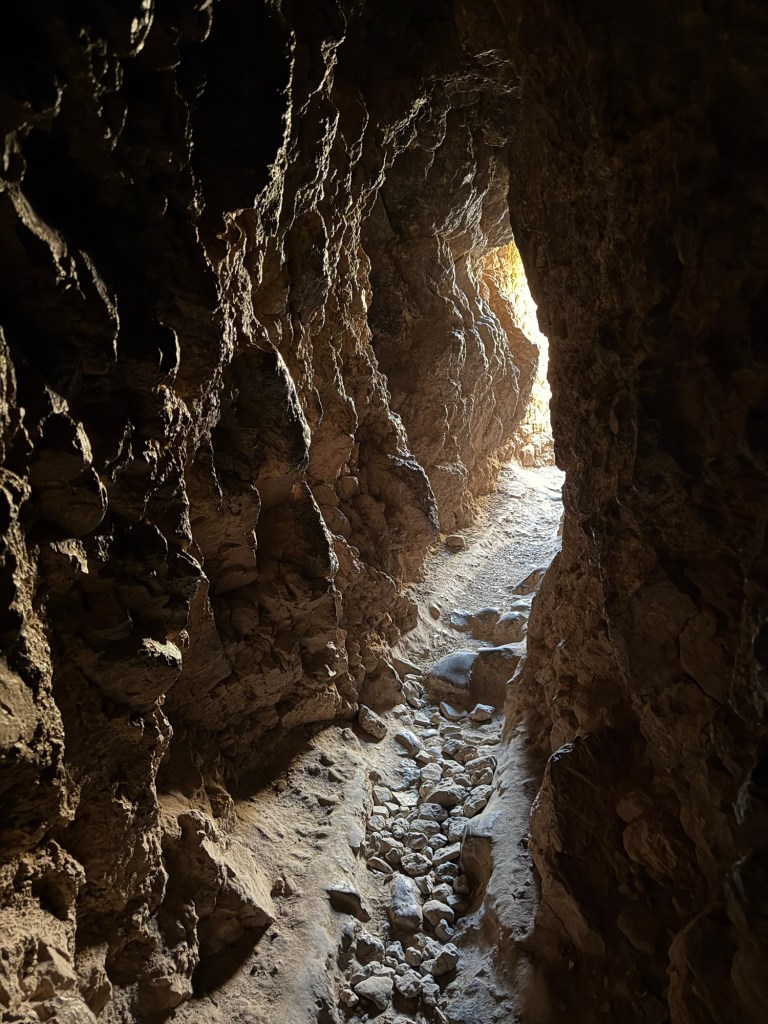
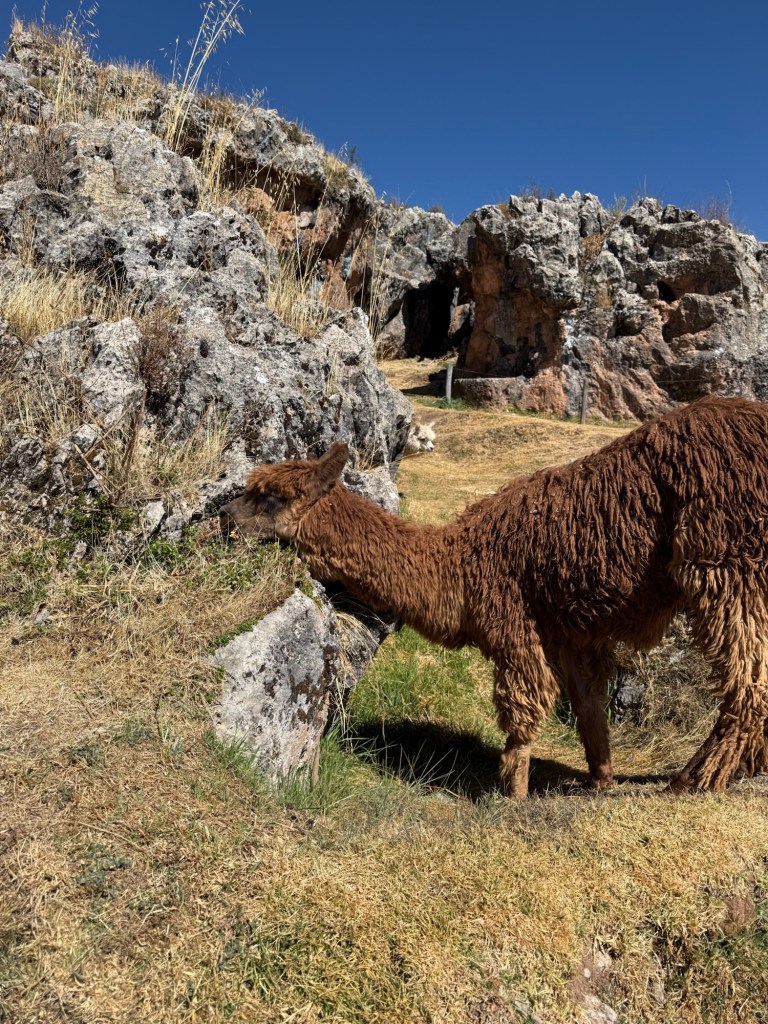
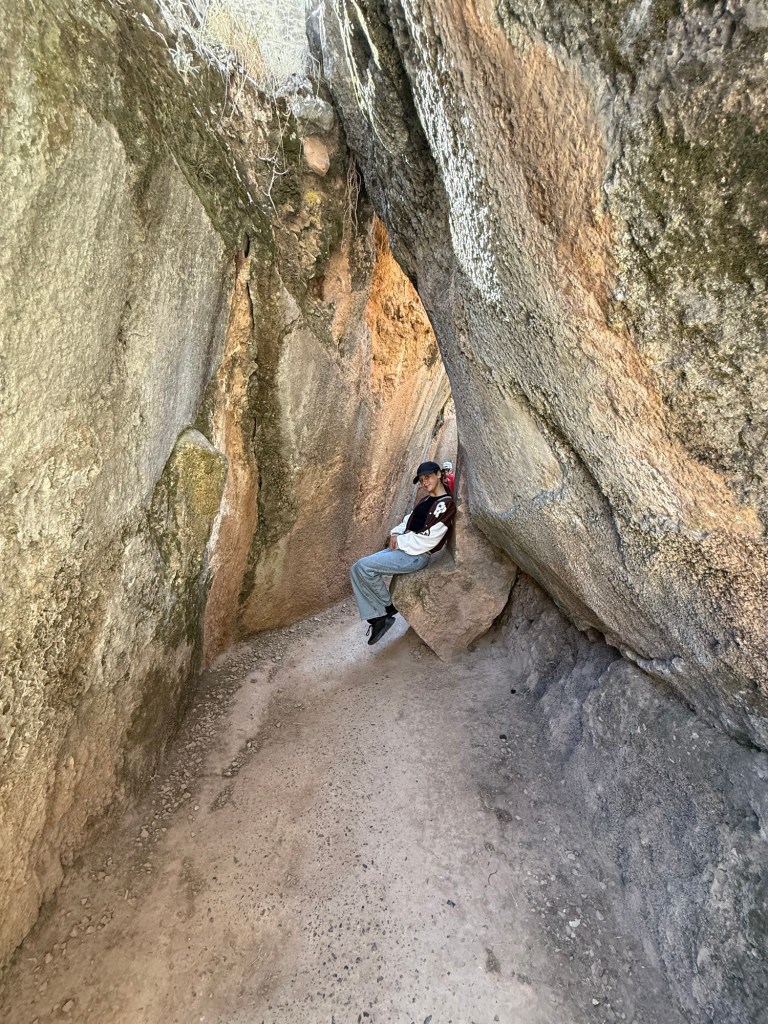
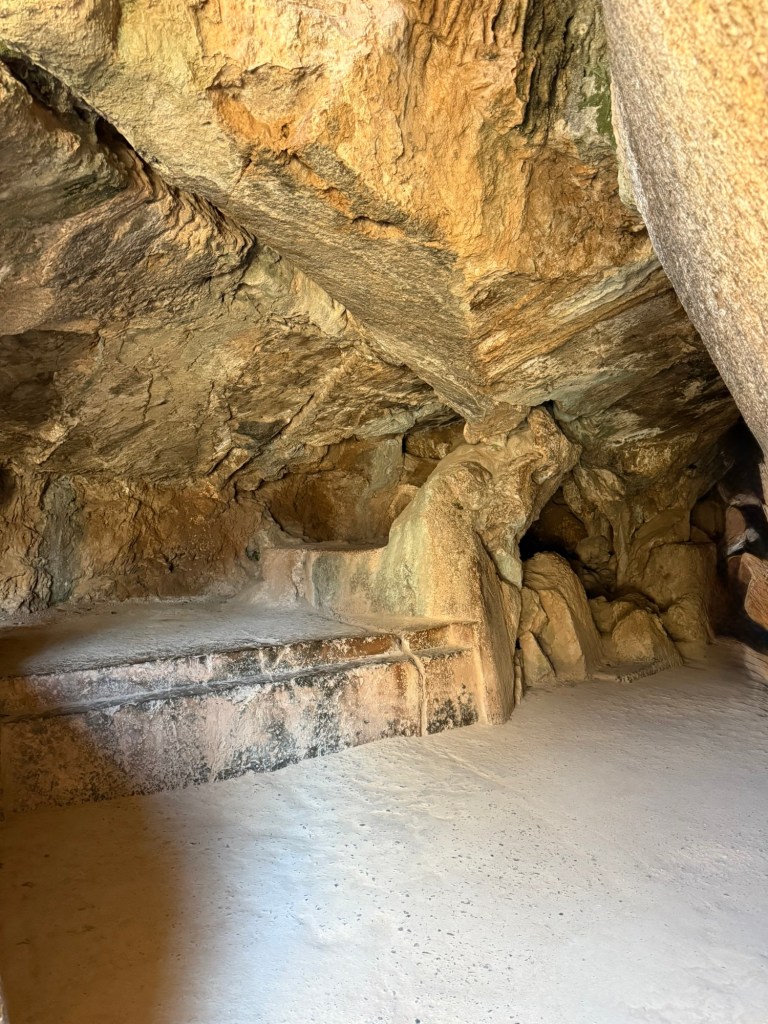
Our second set of ruins were called “Quenco”. Here we met some wild llamas and took some trips through cave systems to see original Incan tombs.
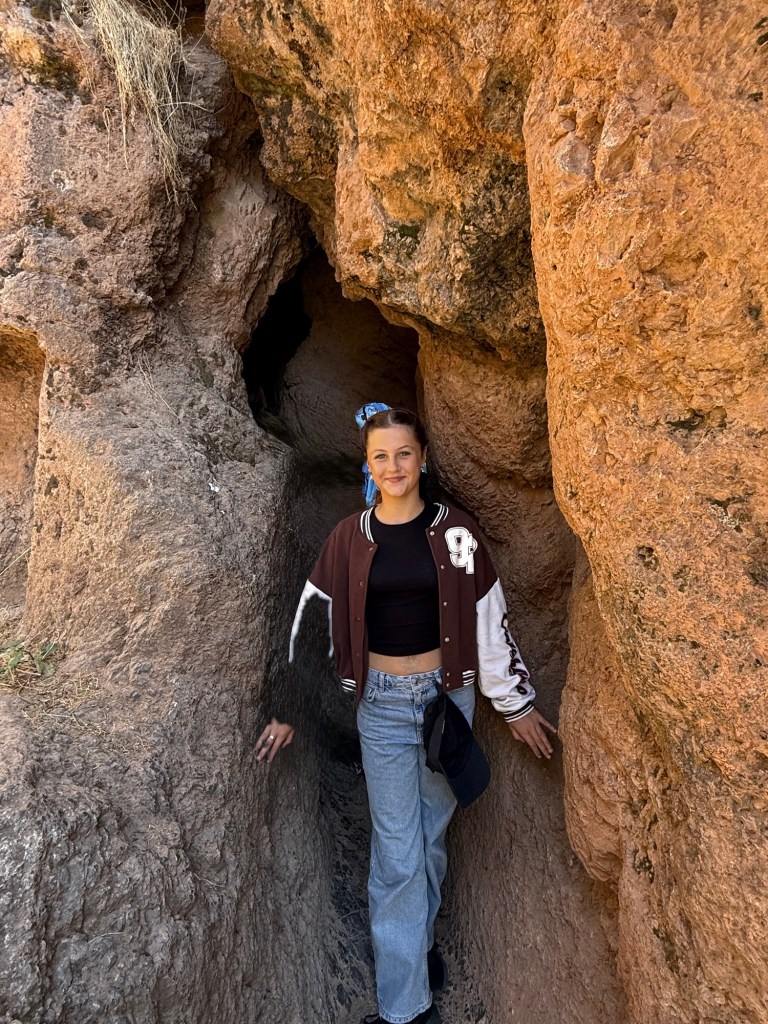
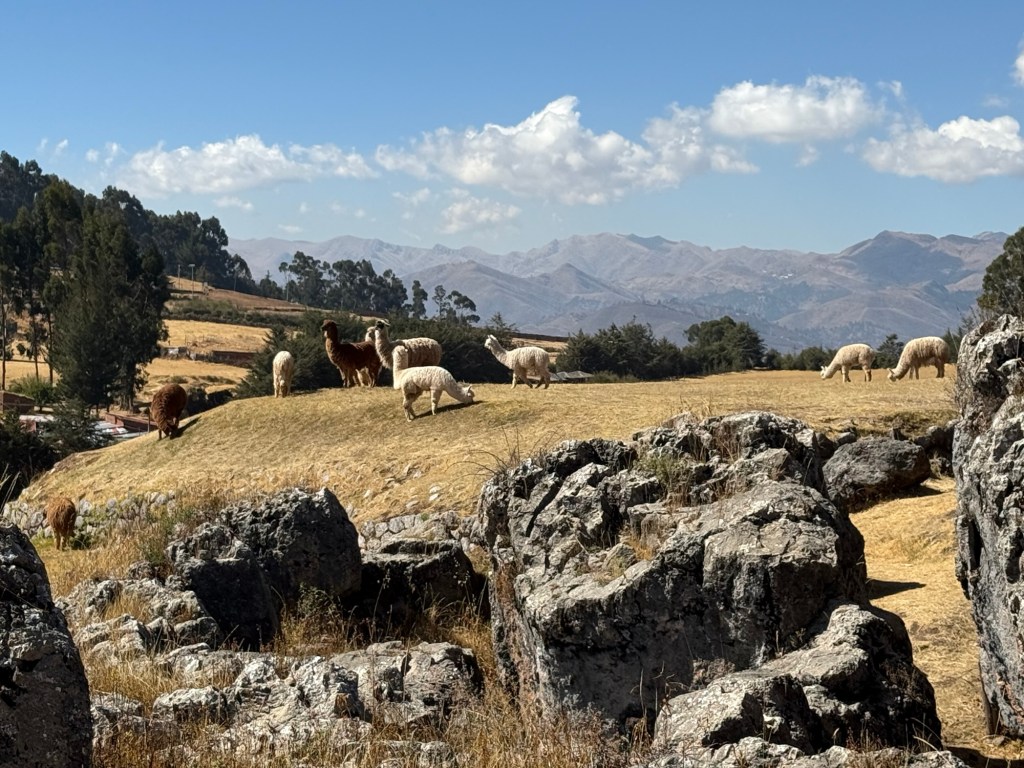
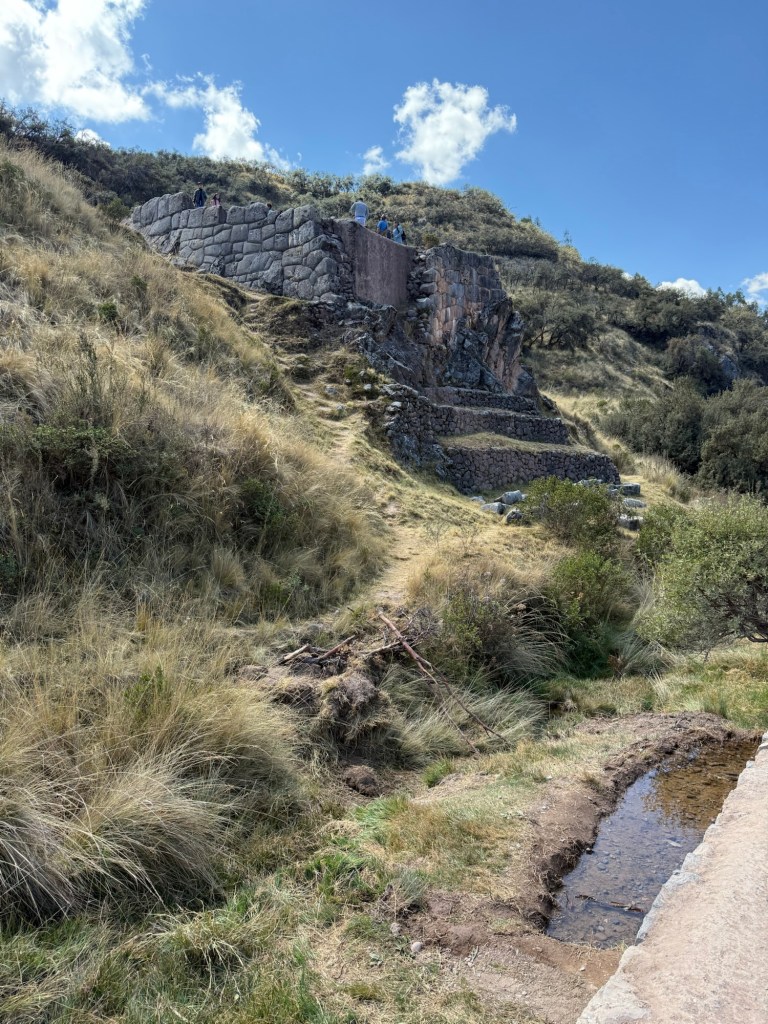
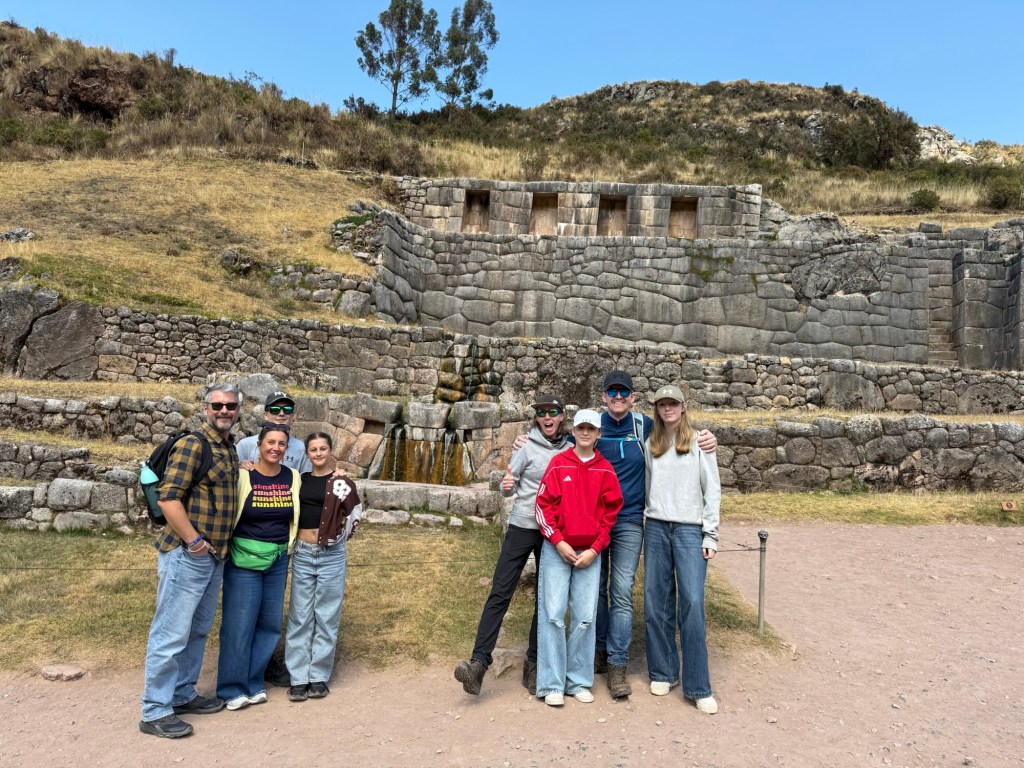
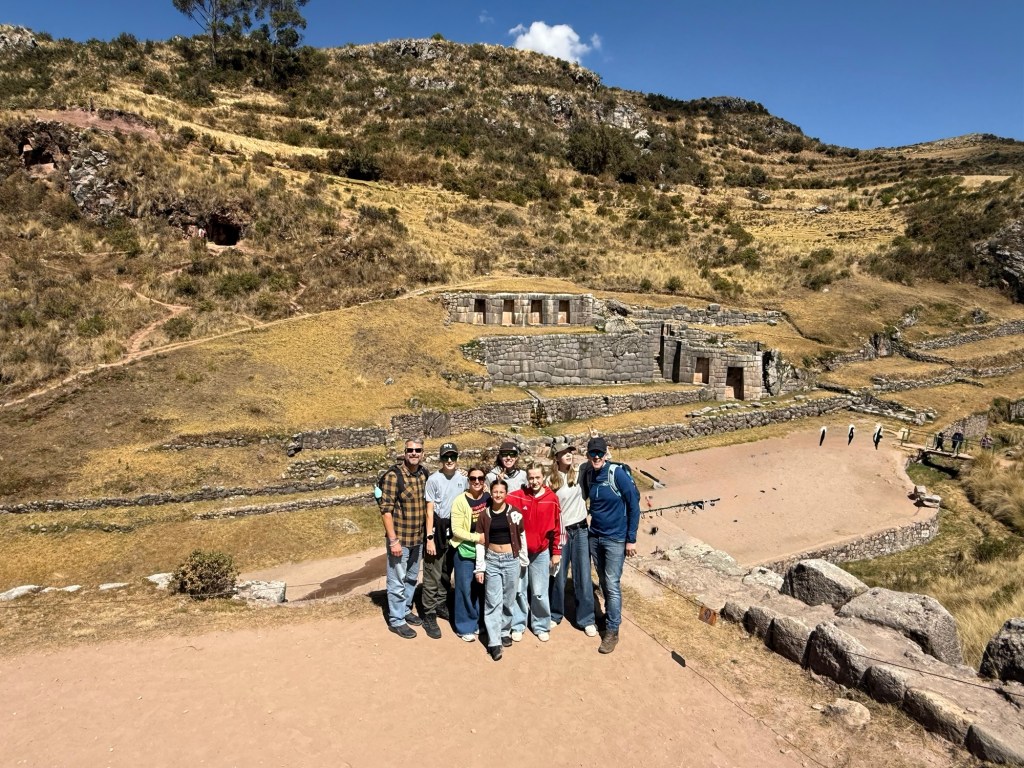
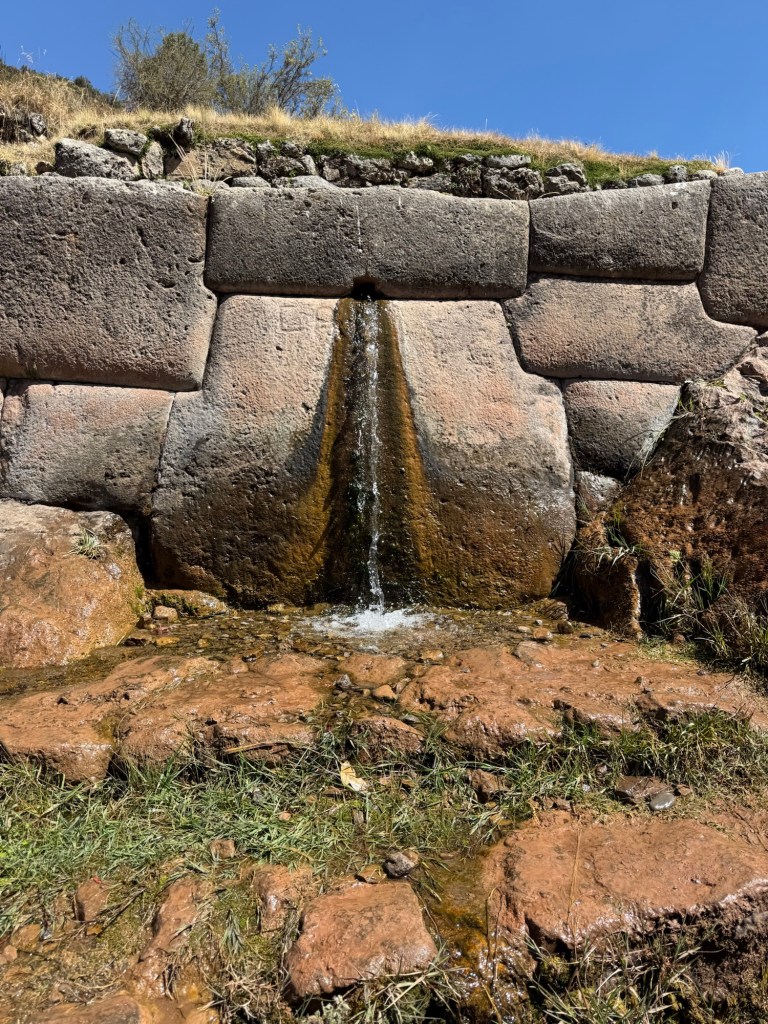
Thirdly, we visited “Tambomachay”, which means “resting spot”. Another name for this place is “Quinoa Puciu” (quinoa water or spring).
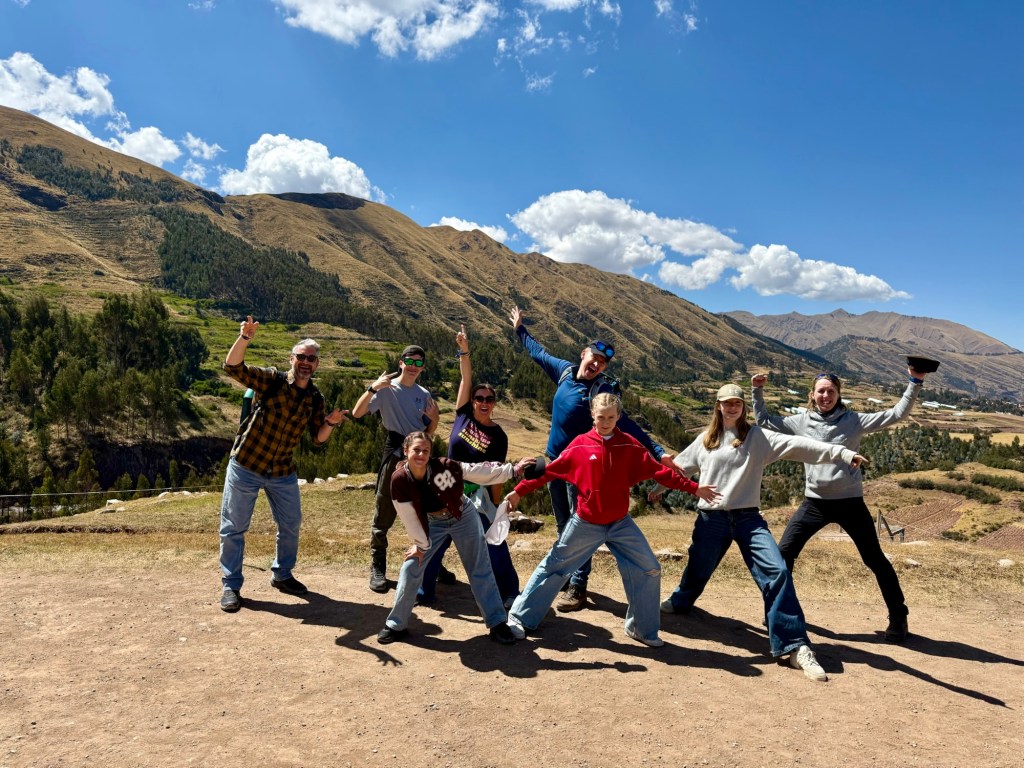
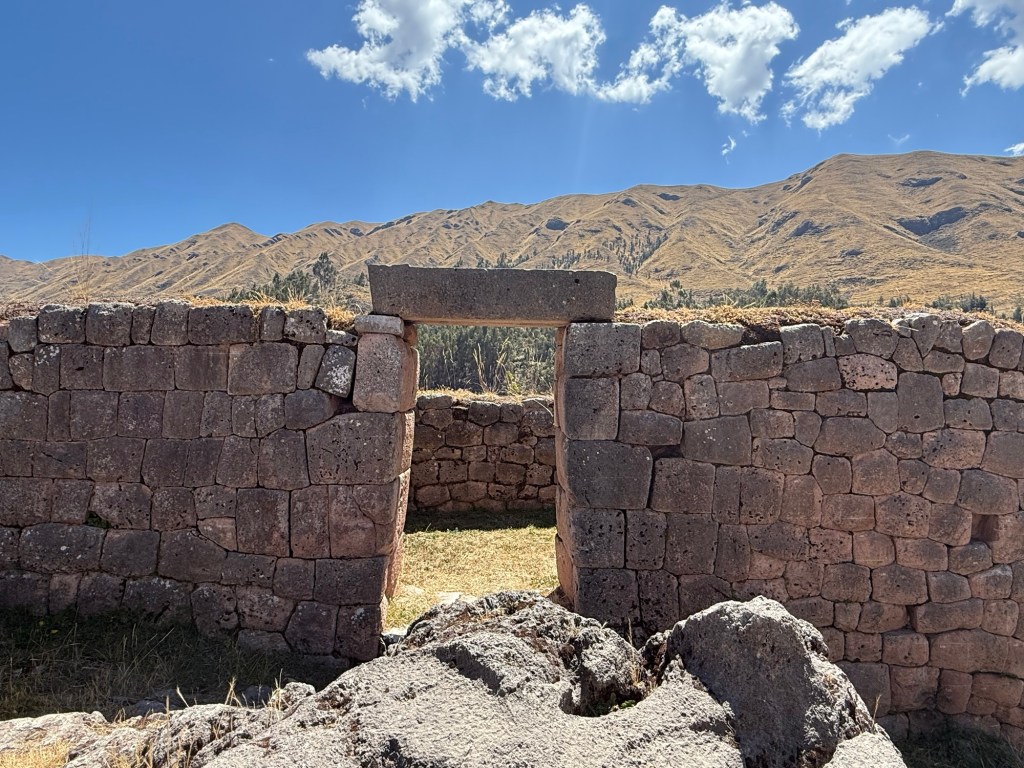
If you look at the photo of all of us, you can see four holes in the walls behind us, and two to the right. These spaces in the walls was where the Incas kept mummies.
The four represents the 4 states of Peru as well as the 4 elements. The two represents the “janan-ting / wasing-ting” (male/female, day/night, sun/moon etc.)
The water here is very rich in minerals, clean, cold and sweet. You used to be able to drink the water, but about 10 years ago they stopped the public from doing it in order to preserve the site better.
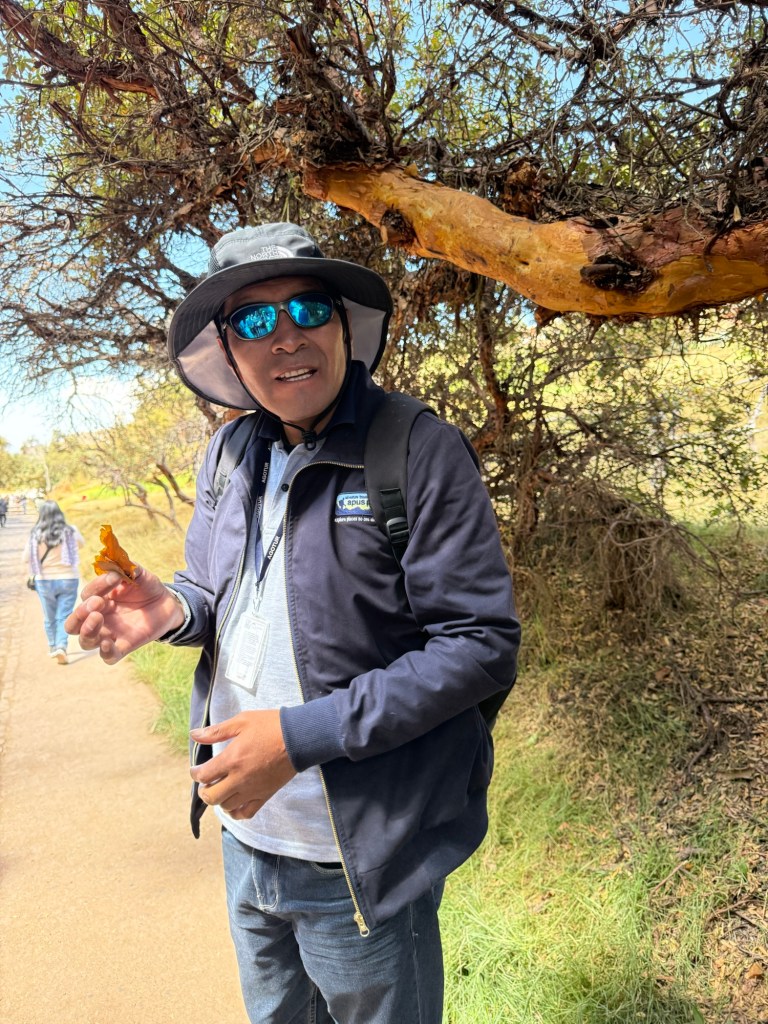
Raul also told us about the trees as we walked back to the exit. The picture of him is by the Qeyunia tree – the bark of this tree is used to reach a high. Local people will make a tea or chew it in order to reach a higher state of consciousness (We didn’t try it! – we’re too busy trying local remedies for altitude sickness!).

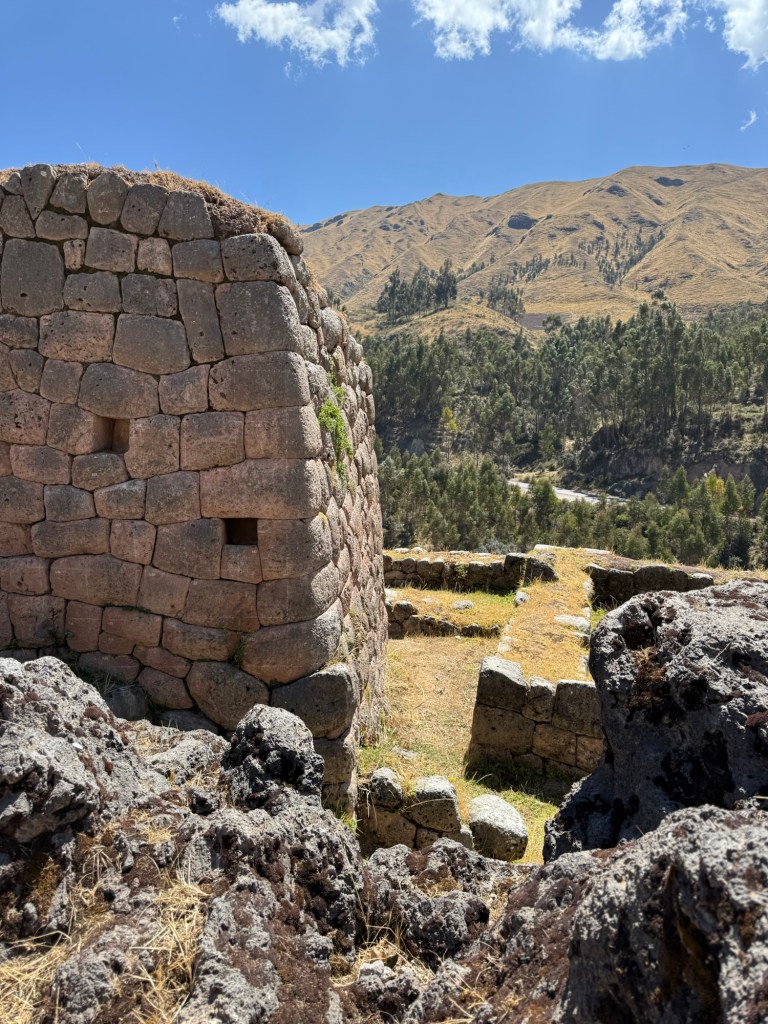
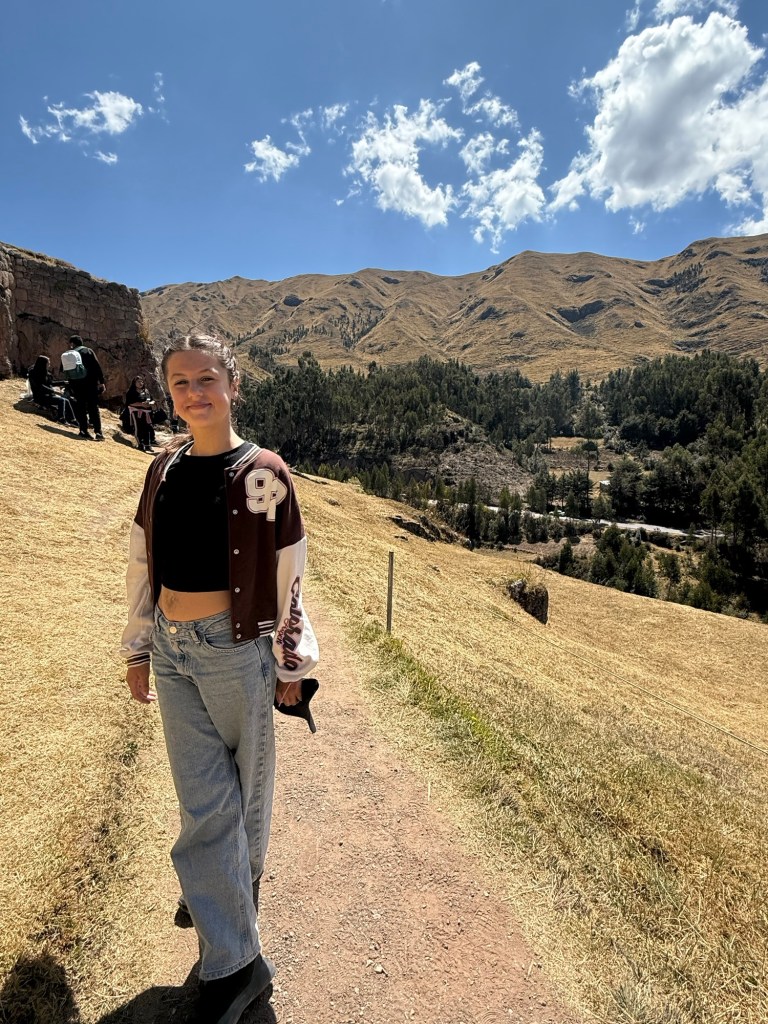
The fourth ruins were called “Puka Pukara”. Puka means red and Pukara means military spot.
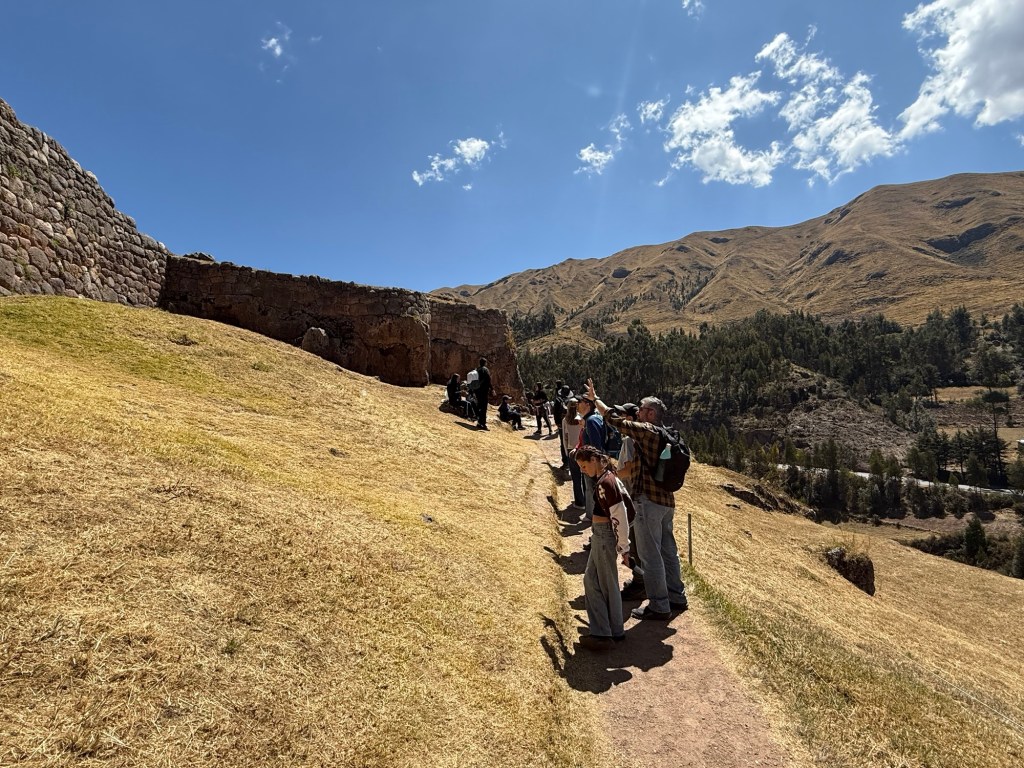
This area originally had a tower, which helped the Incas have a view of the whole valley. This was a control checkpoint (when people came from the jungle to Cusco). They brought (by llama) many things to trade.
After the ruins, we headed back into Cusco city and set off to find some lunch before we met Raul again for our afternoon walking tour.
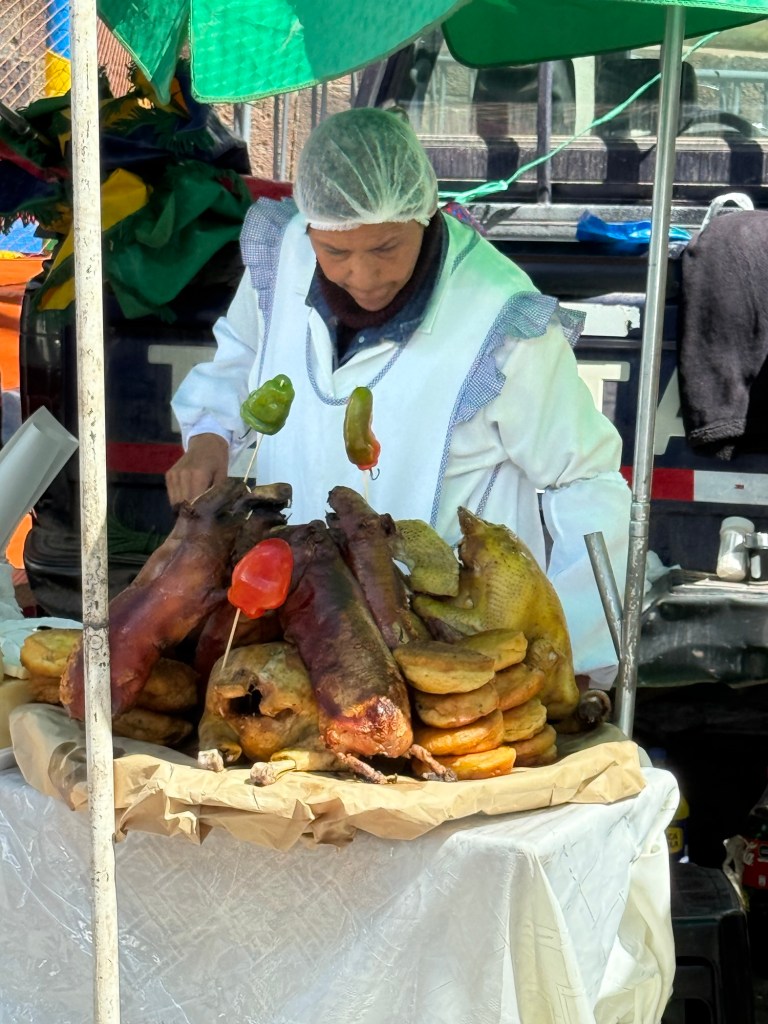
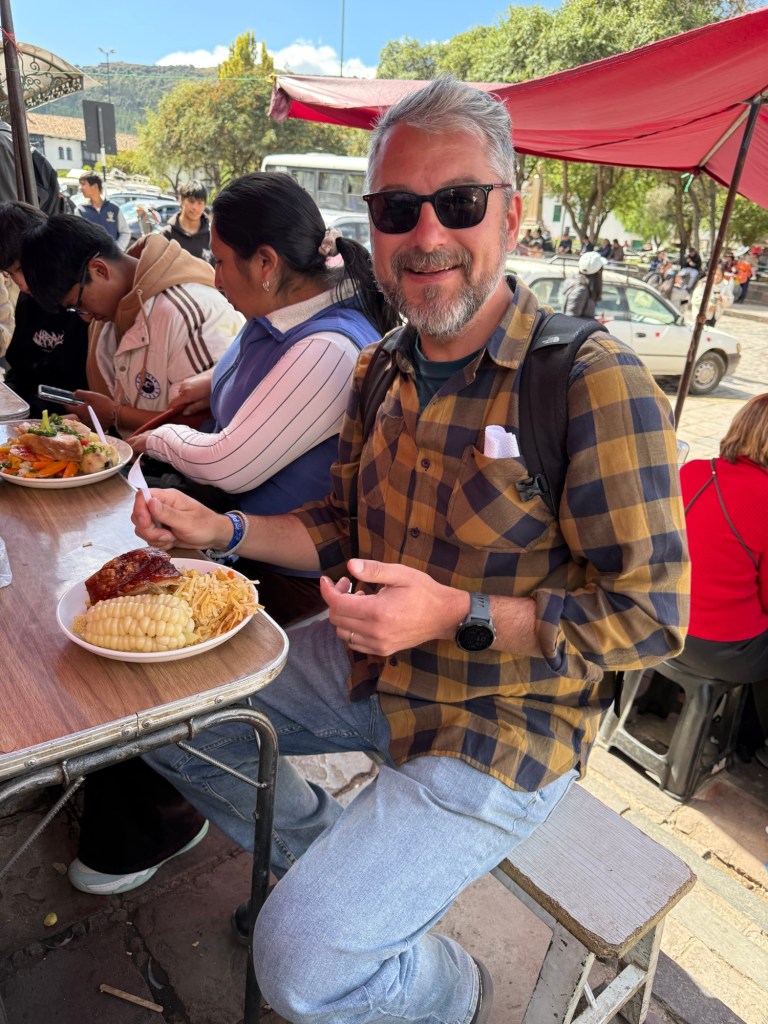
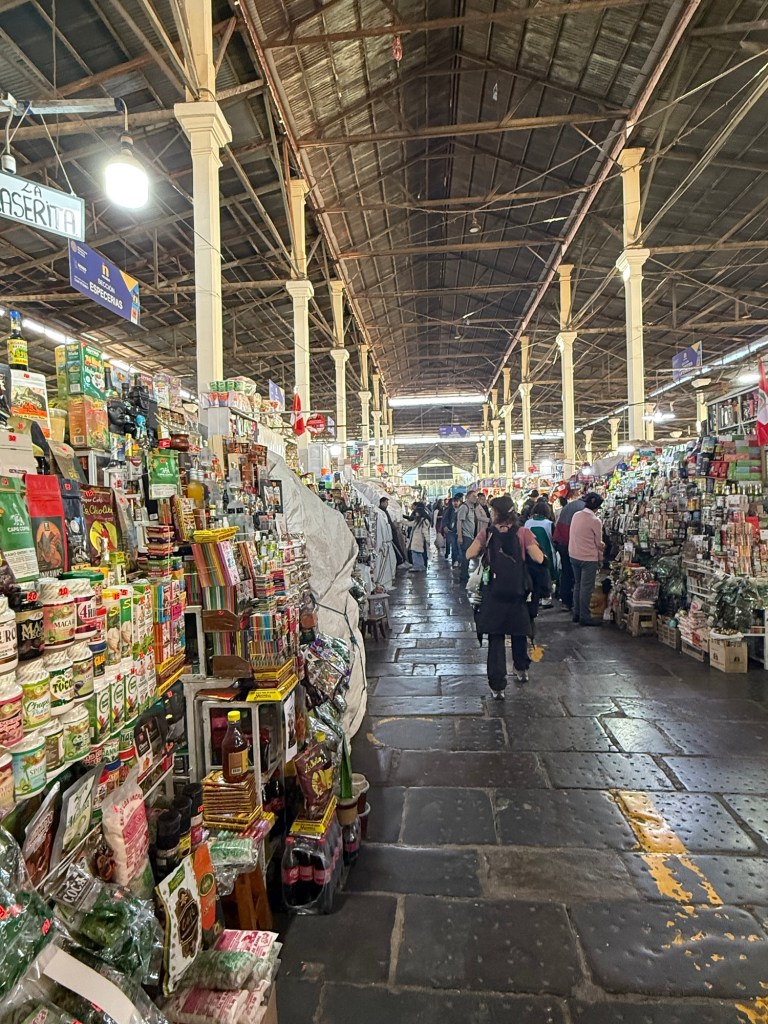
We enjoyed wandering the streets, and discovering a local market which sold (amongst the roasted guinea pigs!) delicious fruit sorbet drinks and fresh fruit. Martin sat with the locals and ate a plateful of pork, corn and spaghetti.
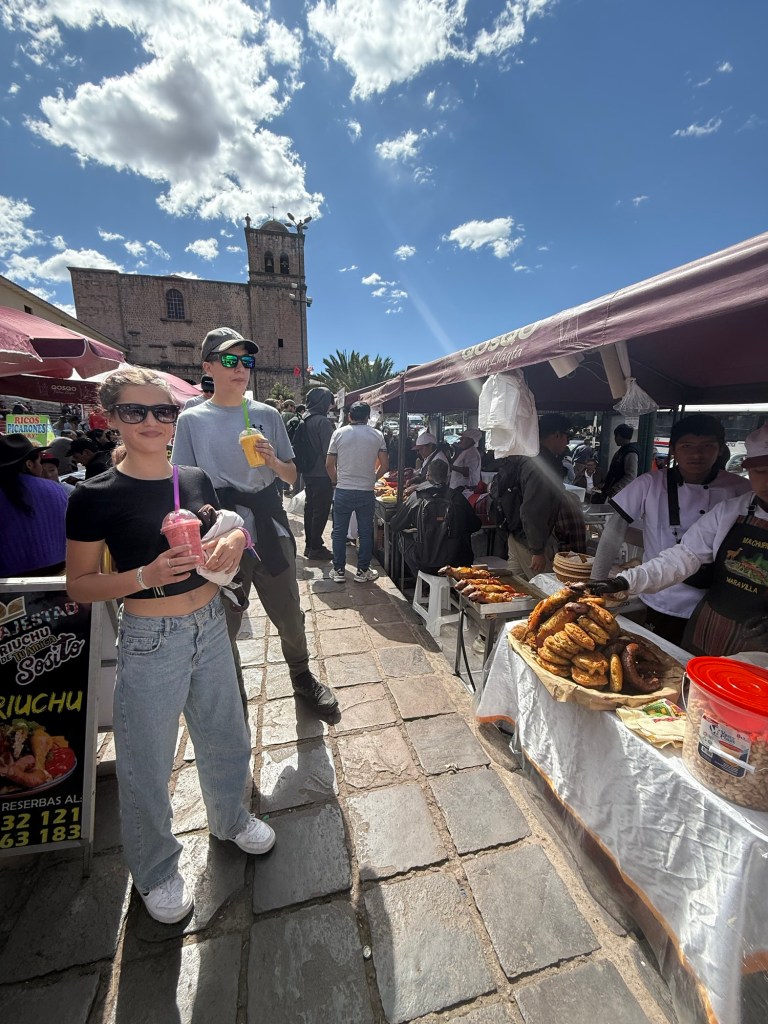
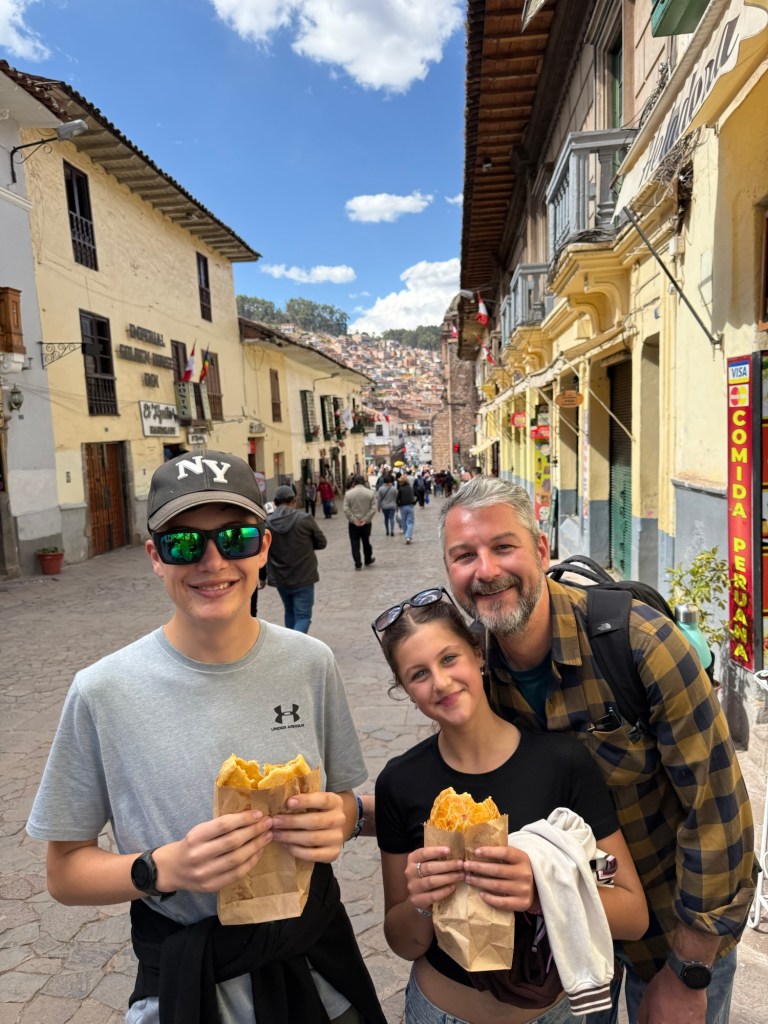
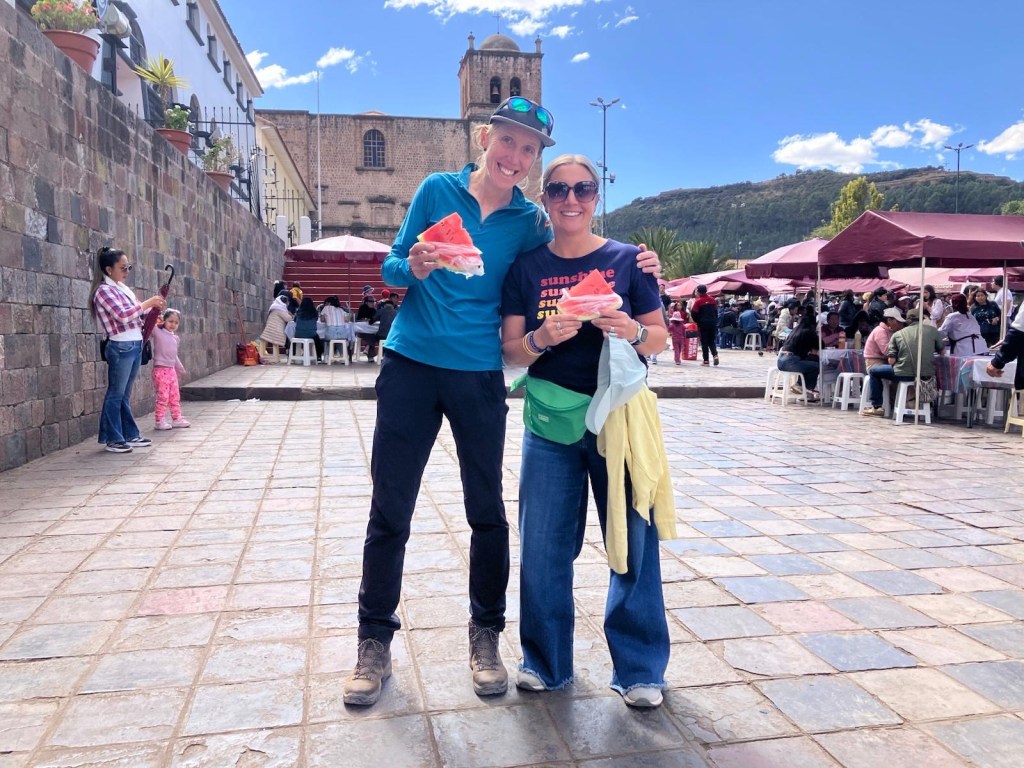
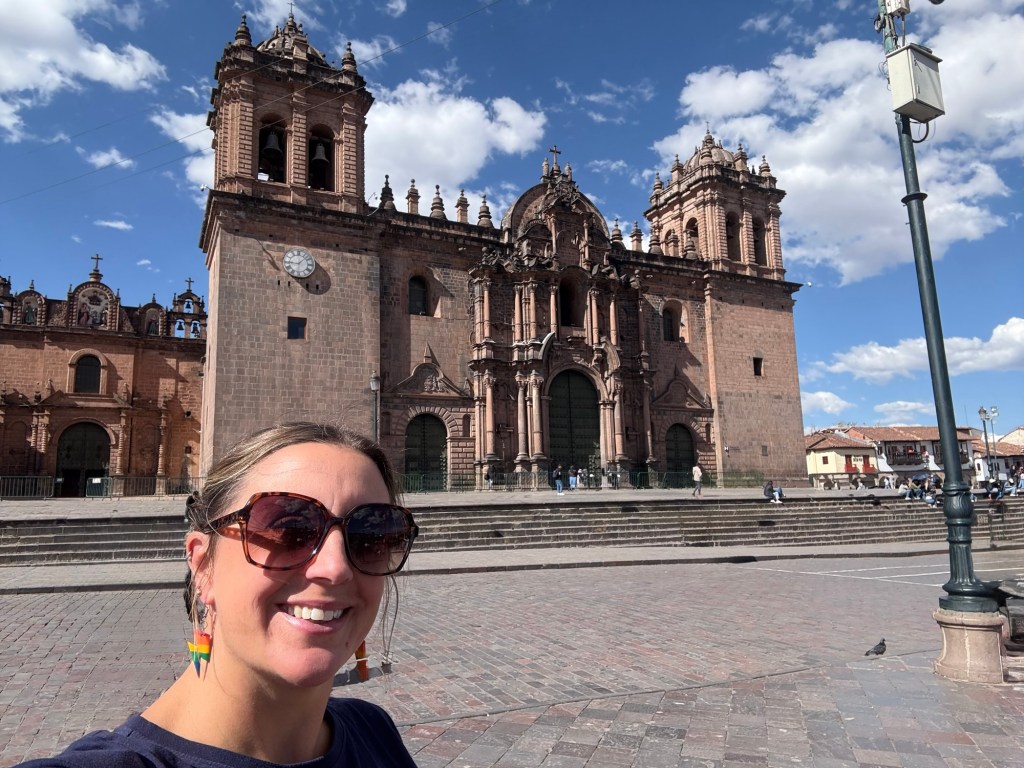
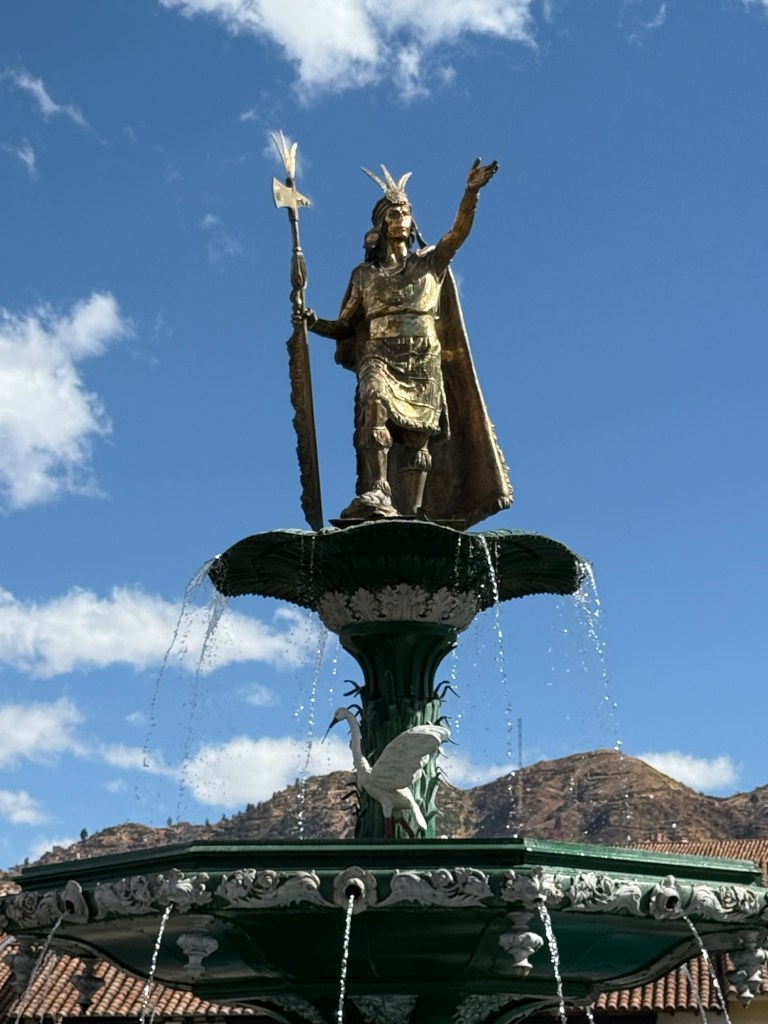
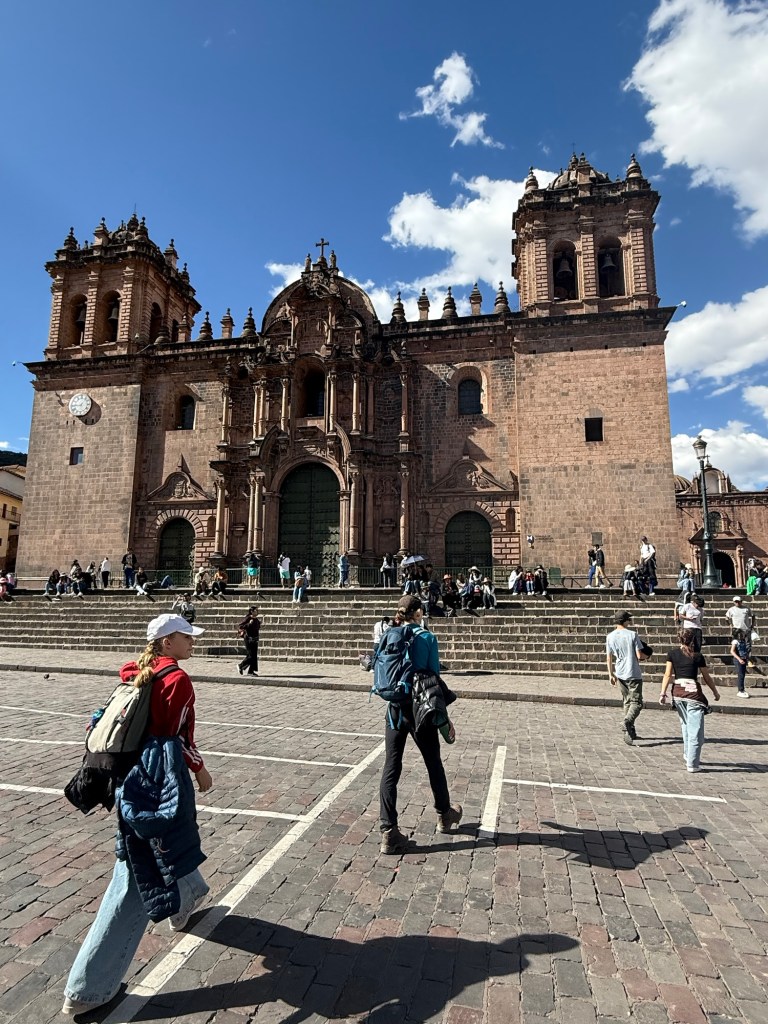
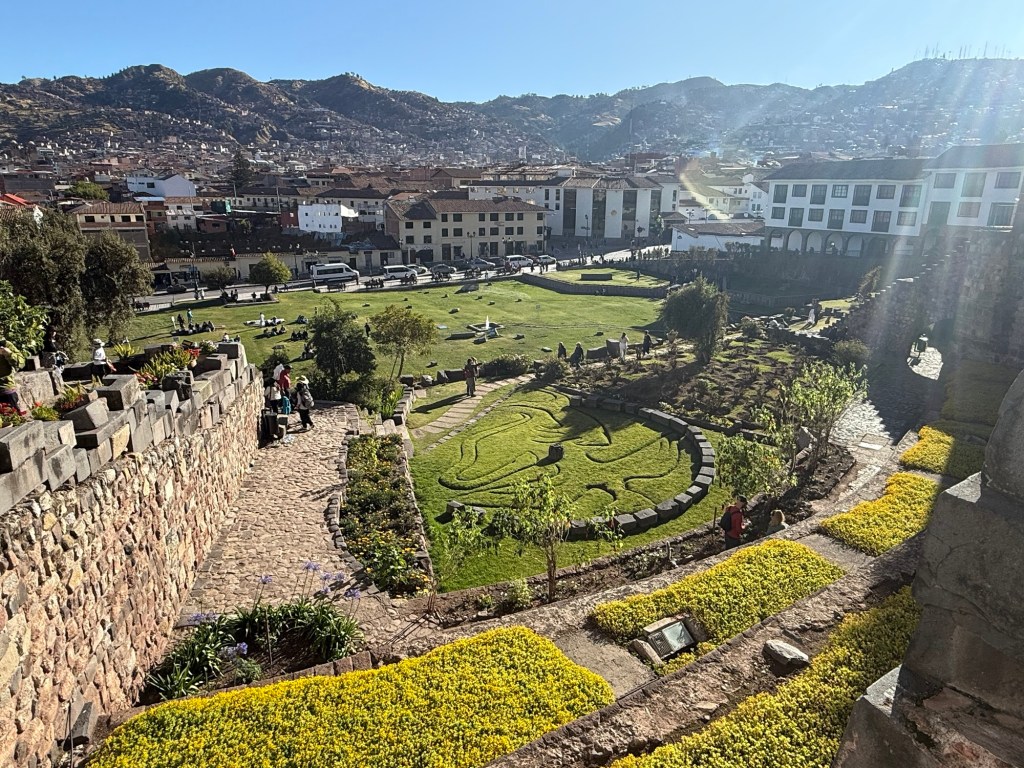
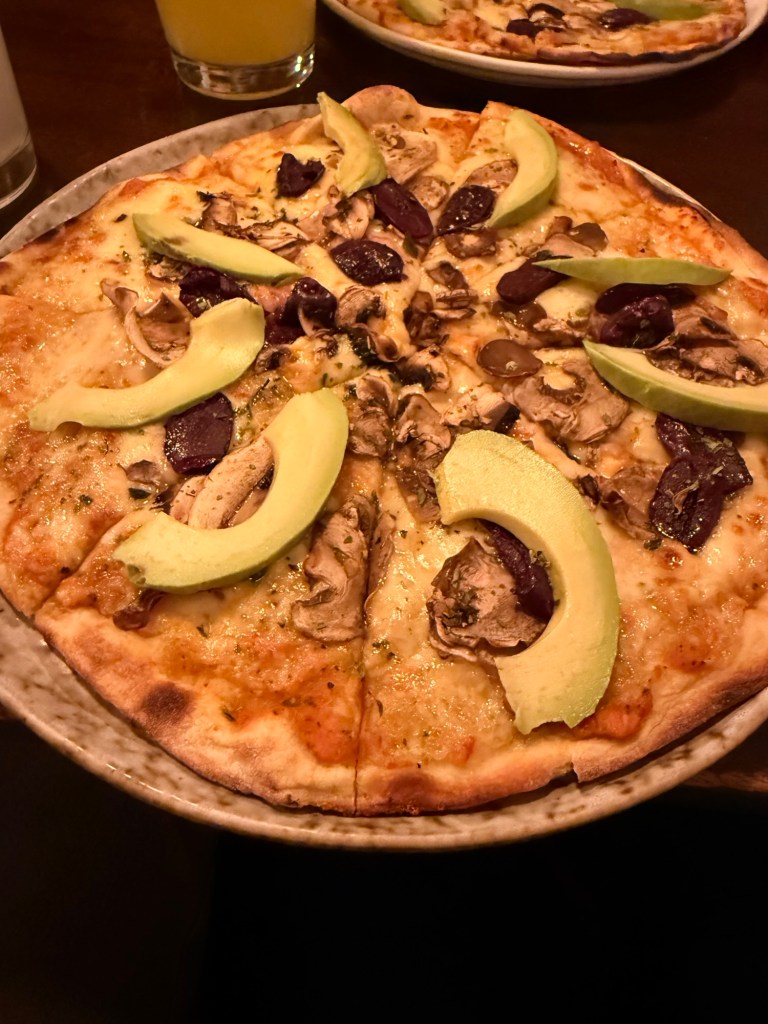
We spent the rest of the afternoon walking the city; we visited the Cathedral, took a local bus (1soles per person!) to the most well-known market in town and ended the day at a veggie/vegan restaurant enjoying delicious stone-baked vegetarian pizzas.
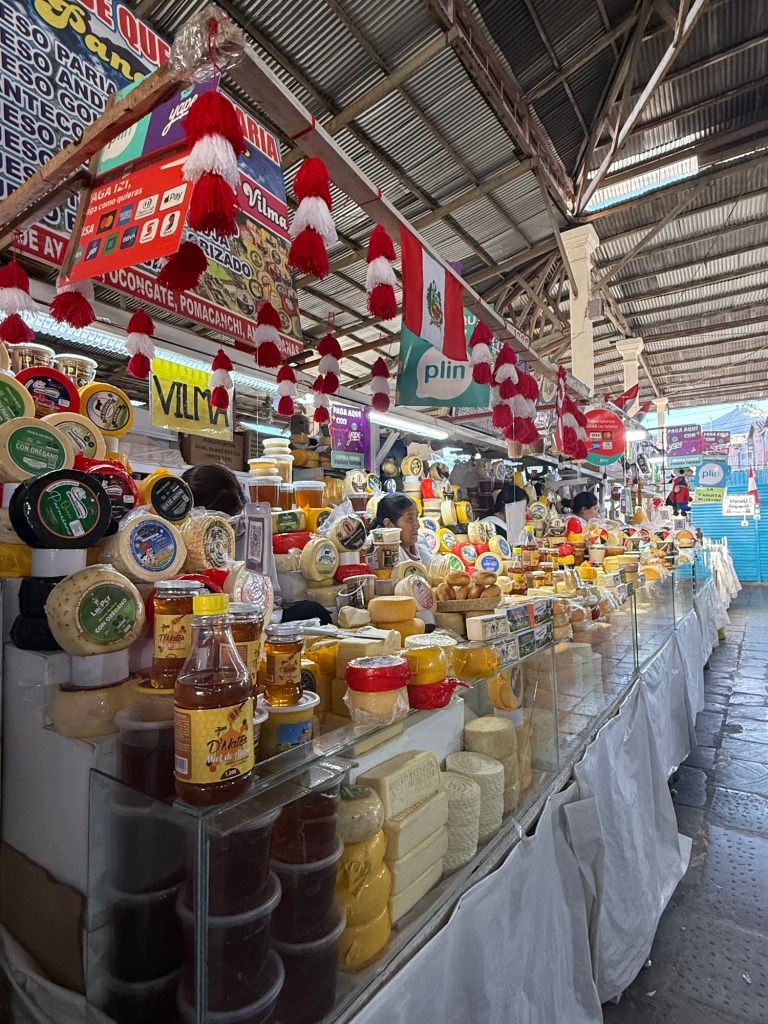
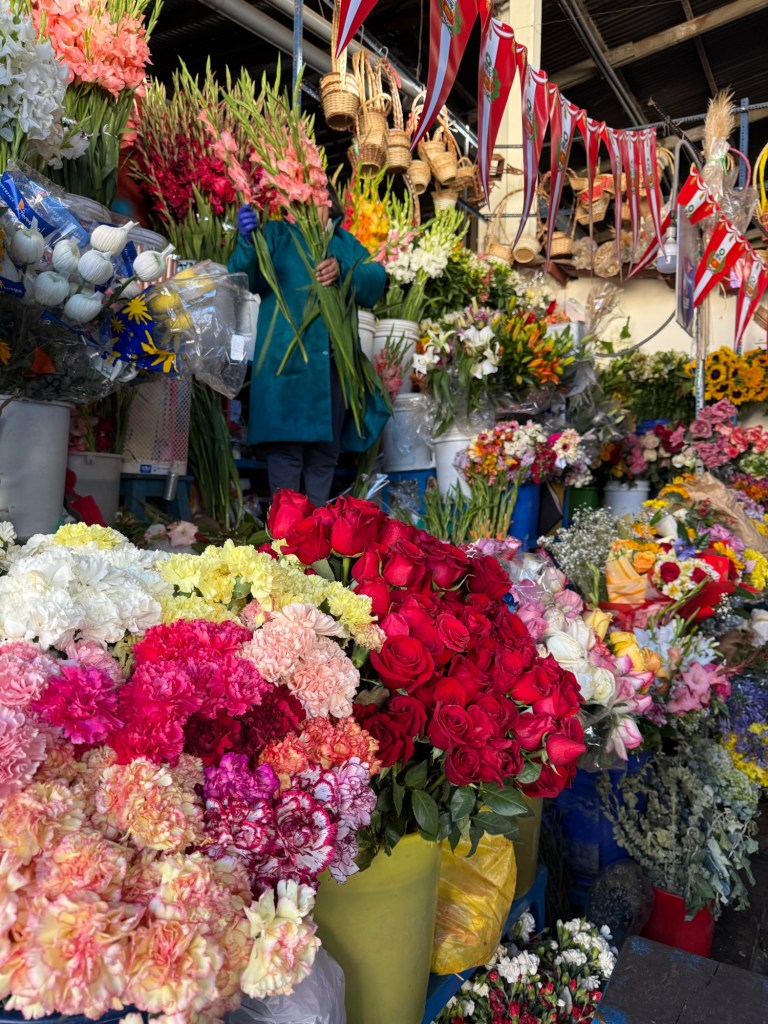
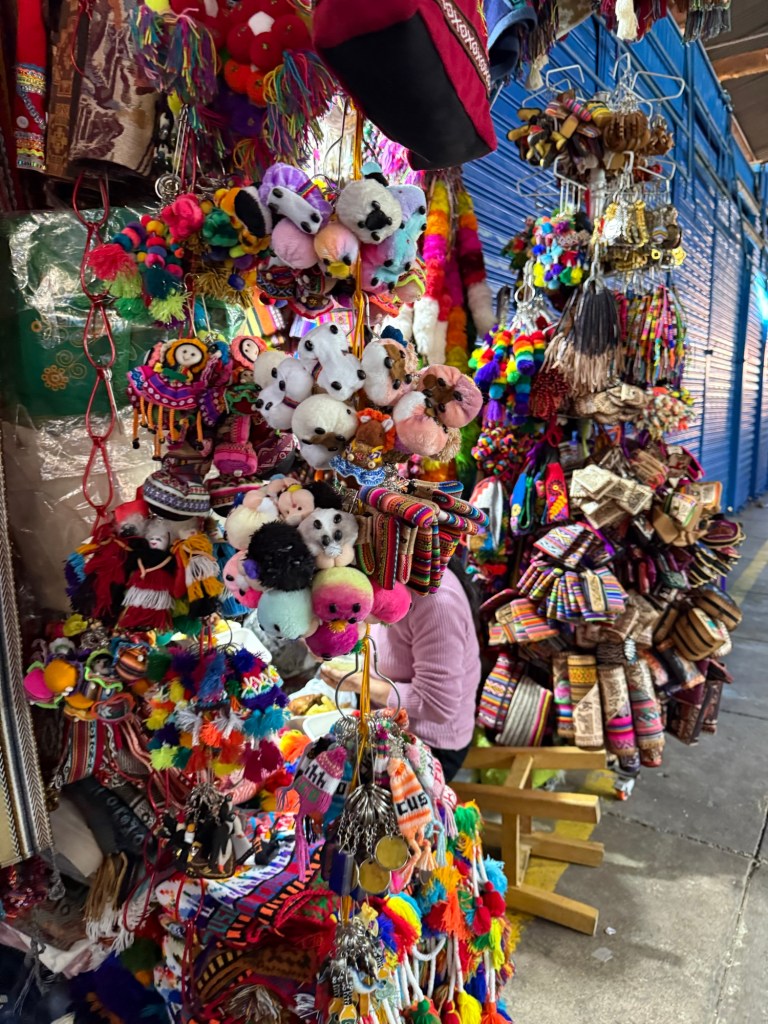
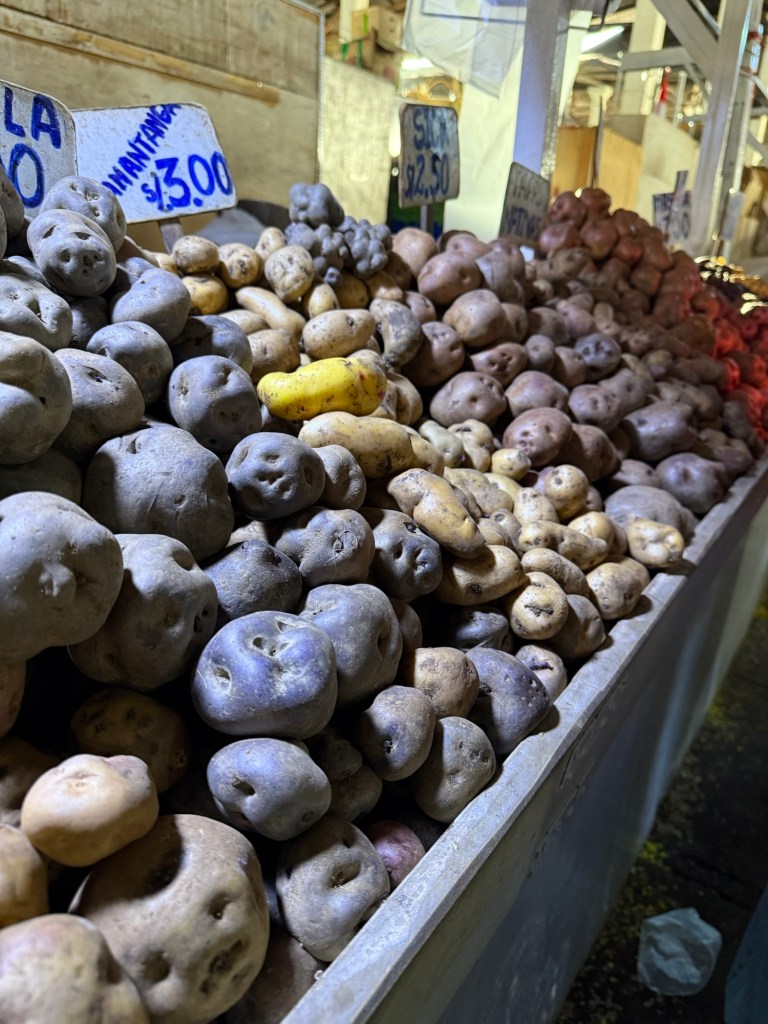
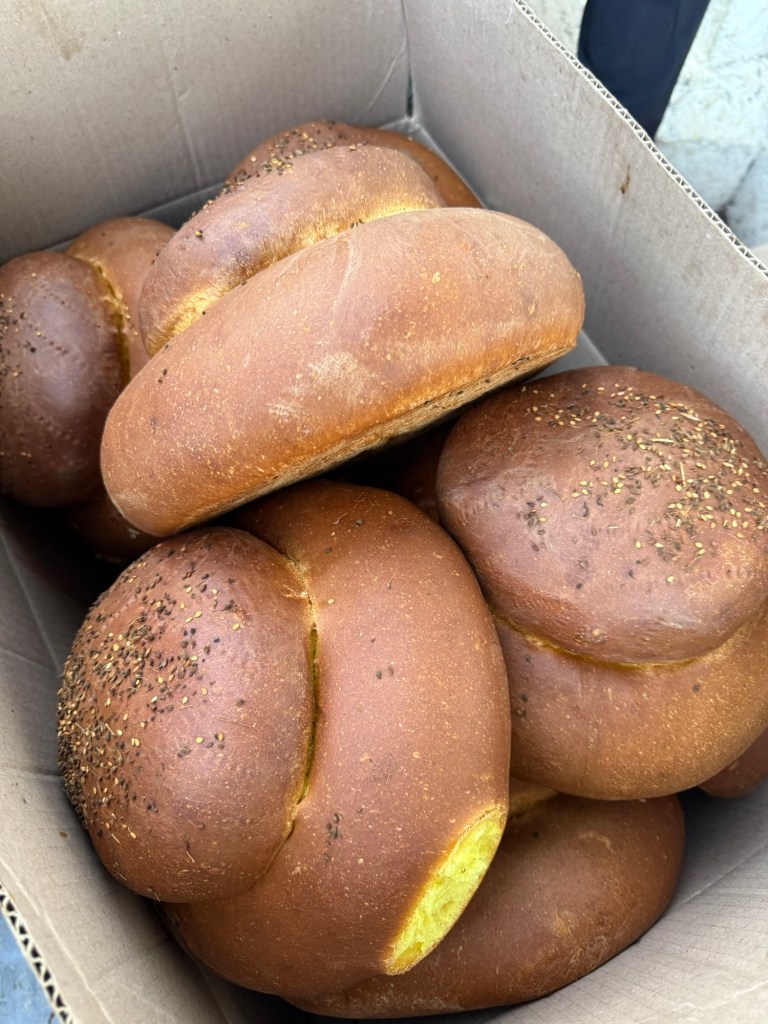
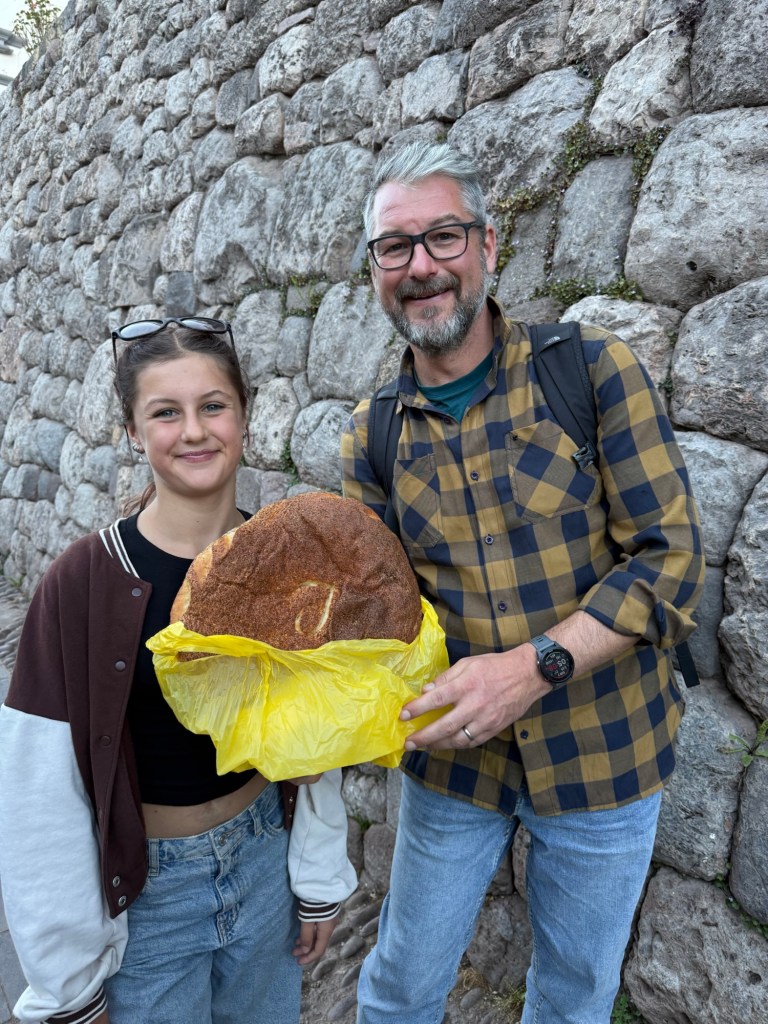
We were hanging by the end of the day, so it was back to the hotel for a shower and early bed again. We also had to do a quick sort out of clothes/bags/laundry, as tomorrow we are leaving our big rucksacks behind in our hotel. We are heading towards the Inca Trail and Machu Picchu… and for that we can only take our day packs with everything we need for the next 3 days.
 Coyle Family Adventures